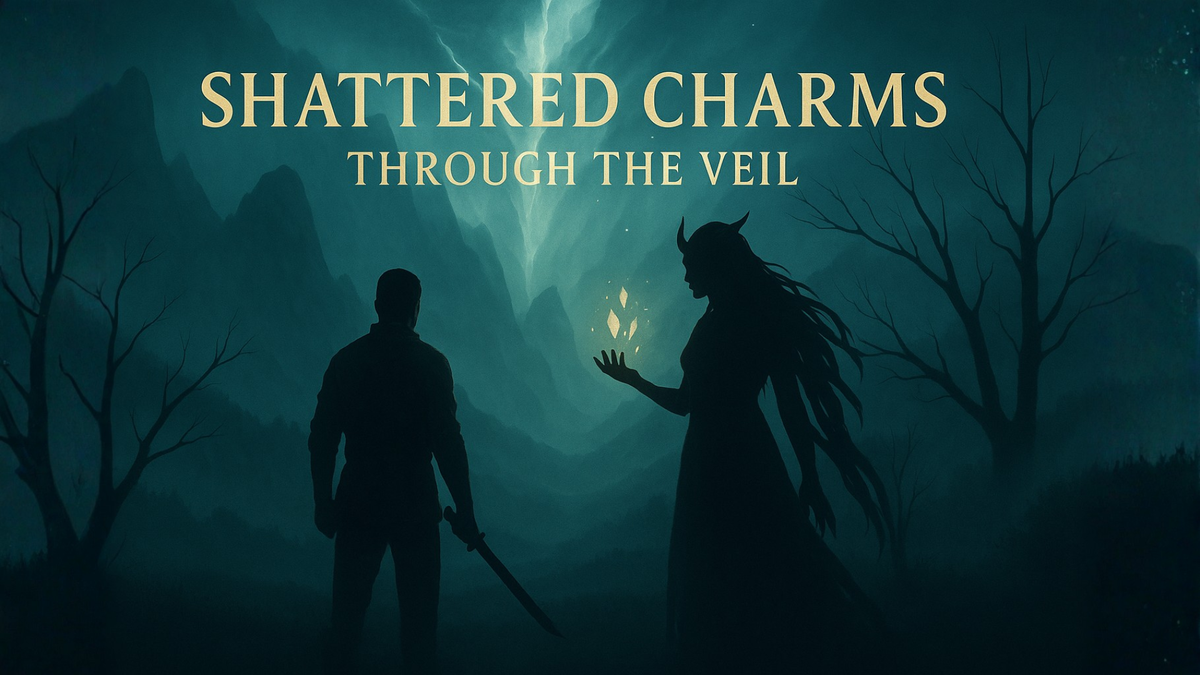
Shattered Charms: Through the Veil
*Note: This prototype focuses on modular combat design and economy-driven progression. Detailed GDD and Data Spreadsheets are available in the Documentation section below.*
Game Overview
What if progression was earned through understanding systems, not leveling numbers?
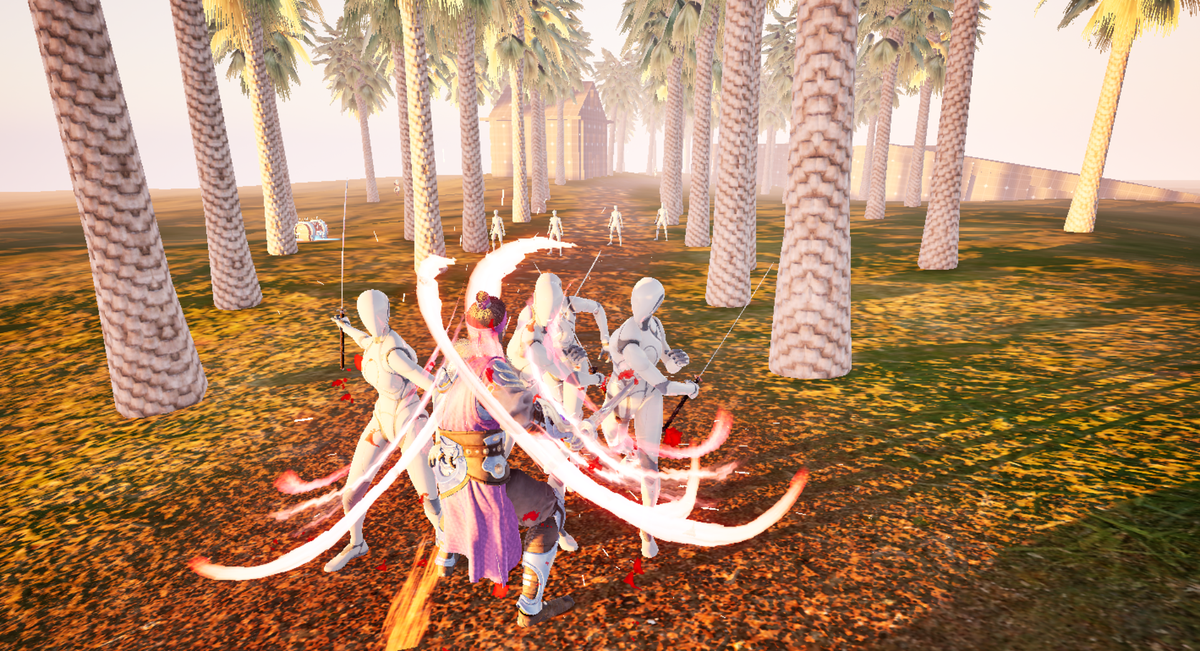
Shattered Charms: Through the Veil is a third-person Action RPG prototype focused on modular combat design and economy-driven progression. Set in a world fractured by a mysterious event, players explore a Hub-and-Spoke region to discover Charms that fundamentally change how they fight and survive.
Rather than relying on experience points or traditional skill trees, progression is driven by experimentation, discovery, and an economy-gated upgrade loop. Understanding how Charms interact becomes the primary path to survival.
Core Gameplay Loop
The Design Challenge
How do you encourage meaningful build variety in a short RPG prototype?
Most action RPGs rely on deep skill trees that take hours to fully unfold. For a 20–30 minute vertical slice, that approach often results in shallow progression. The solution became a modular Charm system that rewards curiosity over raw stats, combined with an economy-gated progression loop.
- 1. Explore: Navigate the "Spokes" to find loot.
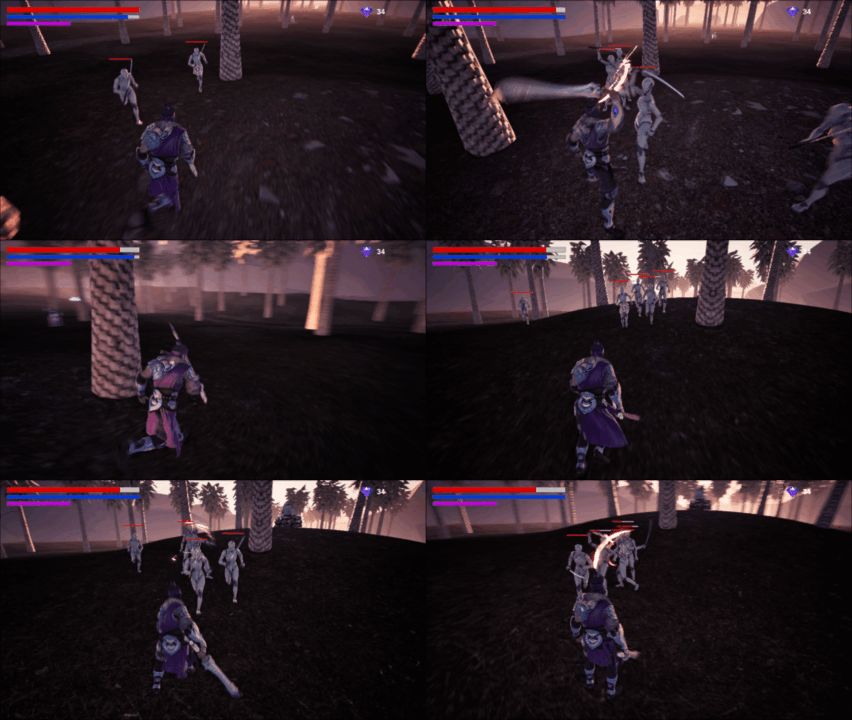
- 2. Survive: Combat enemies using Charms to earn Jewels.
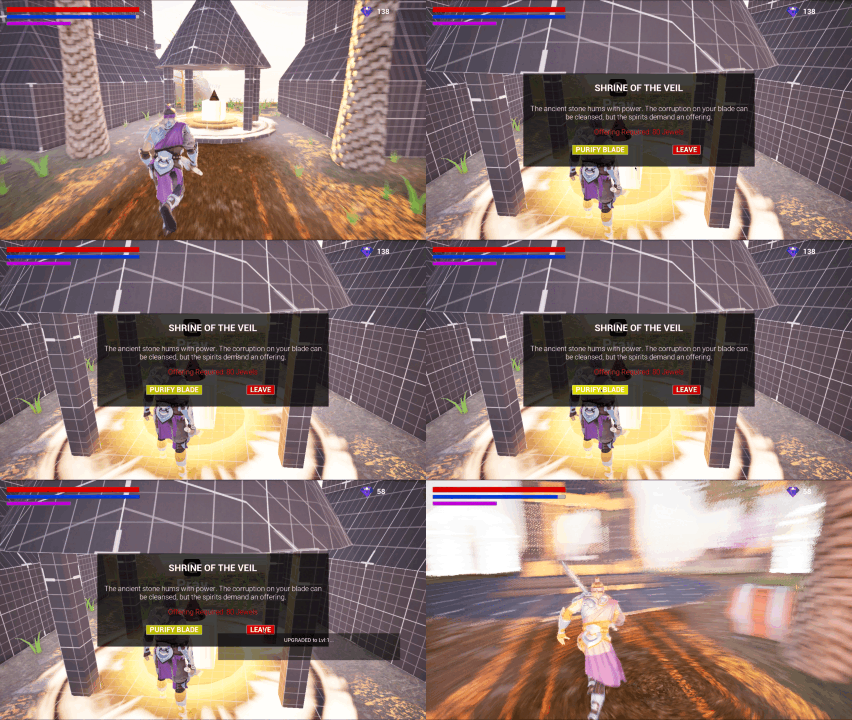
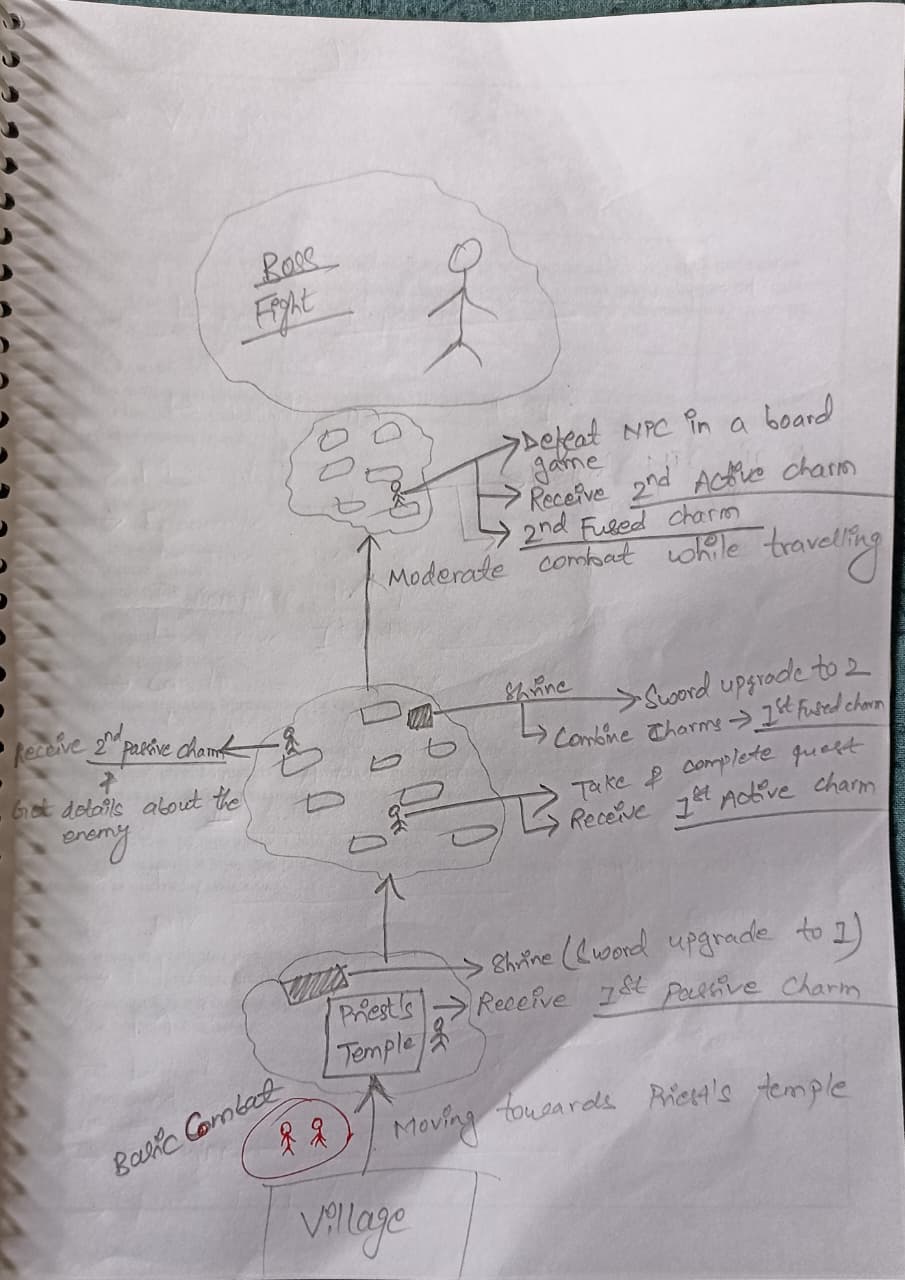
- 3. Upgrade: Purify the weapon through Shrines using Jewels.
- 4. Progress: Unlock access to the final Boss Arena.
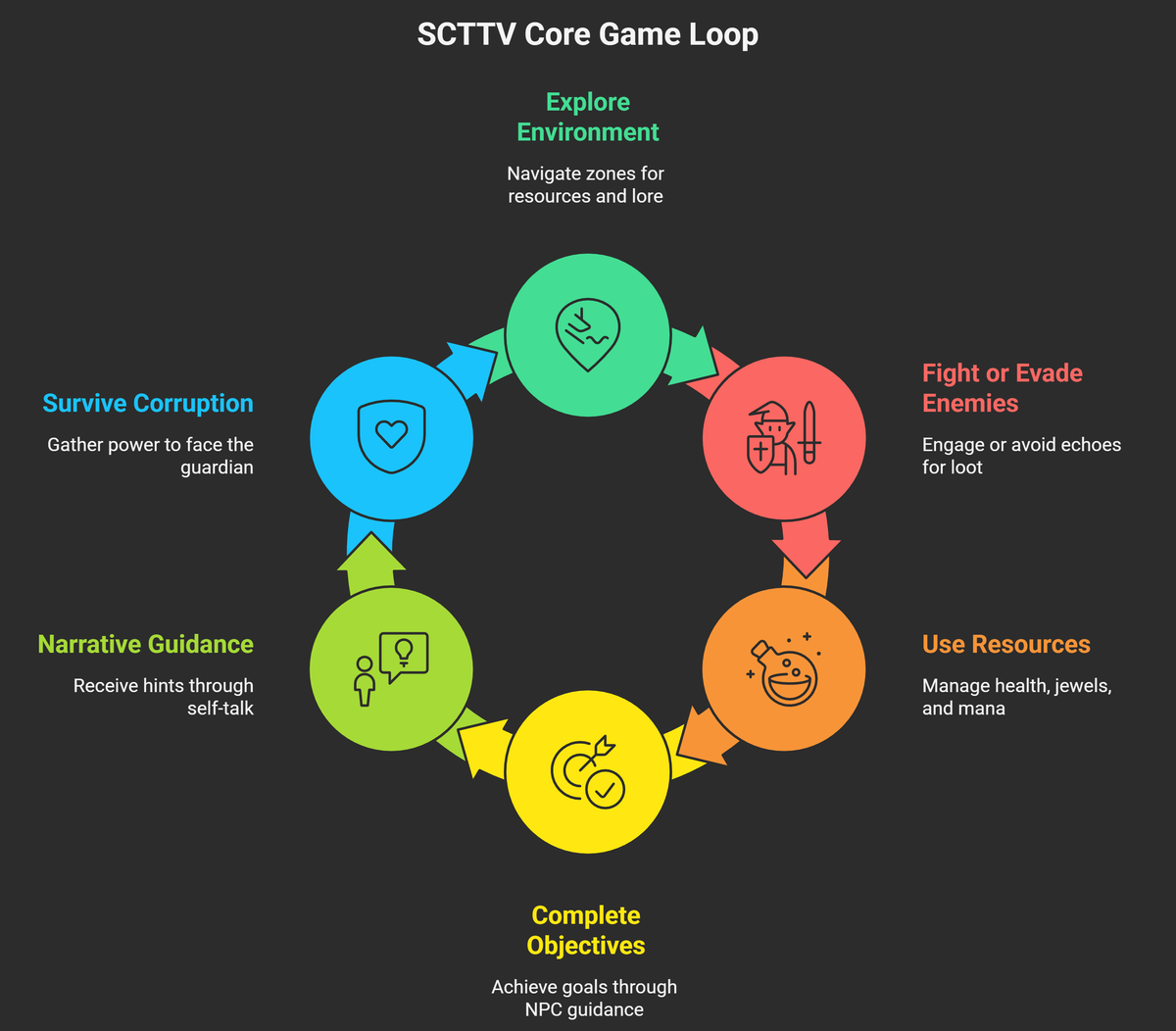
The economy loop ties combat directly to progression.
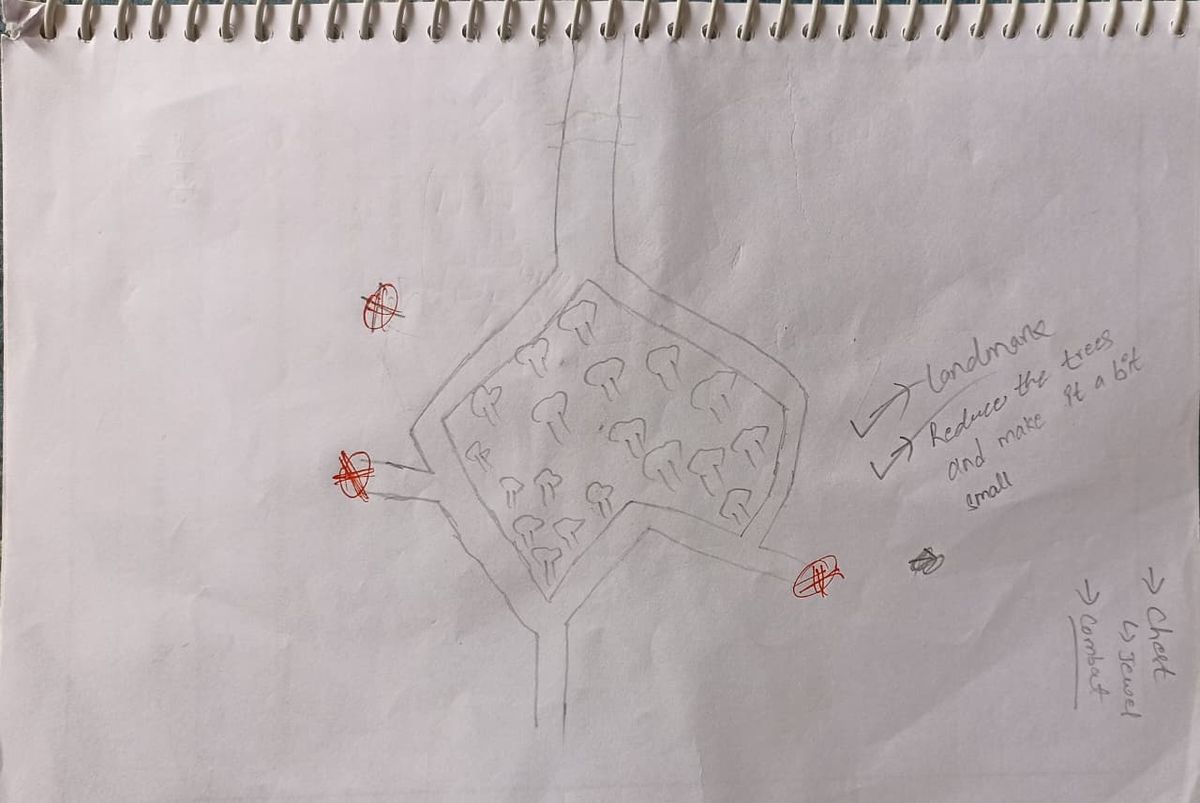
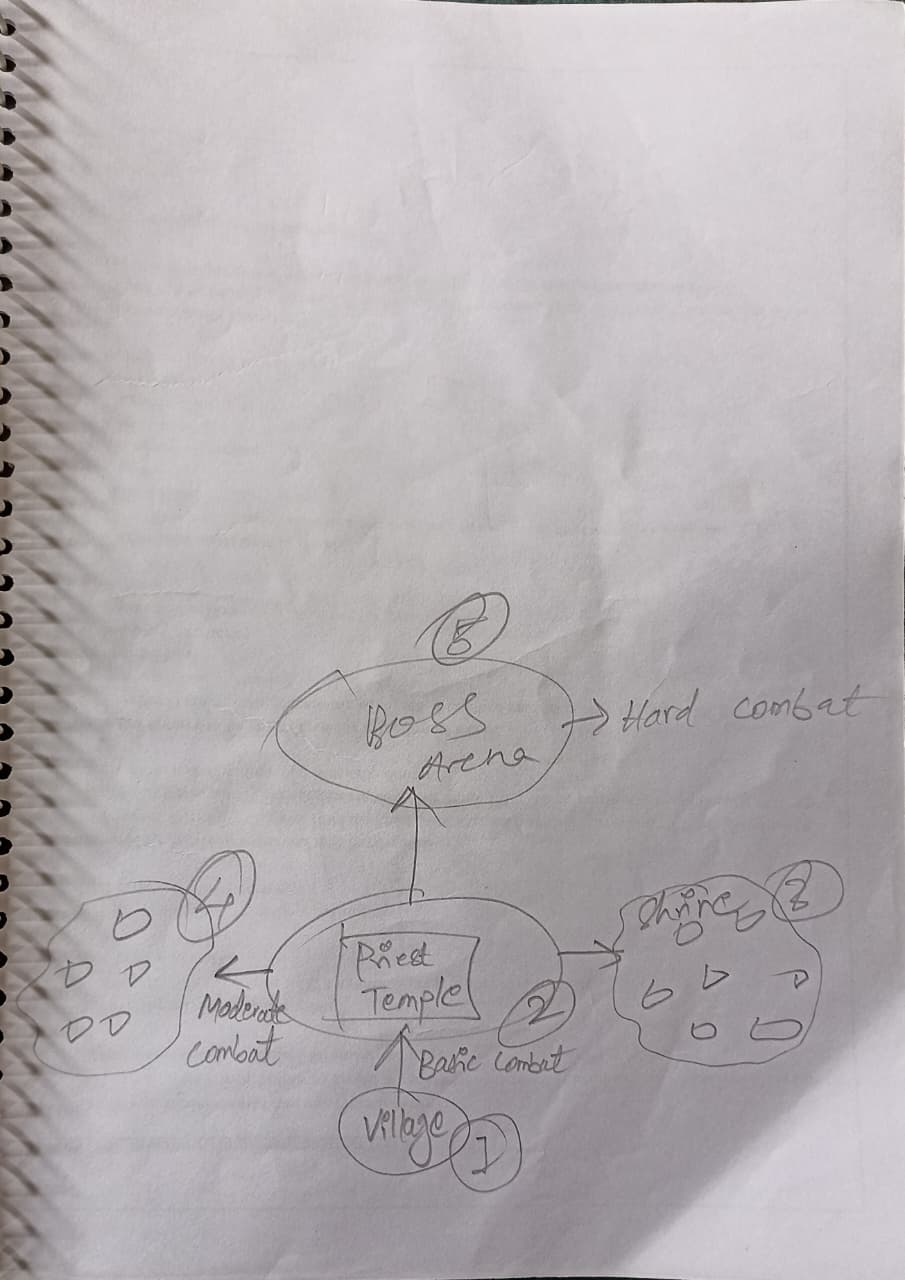
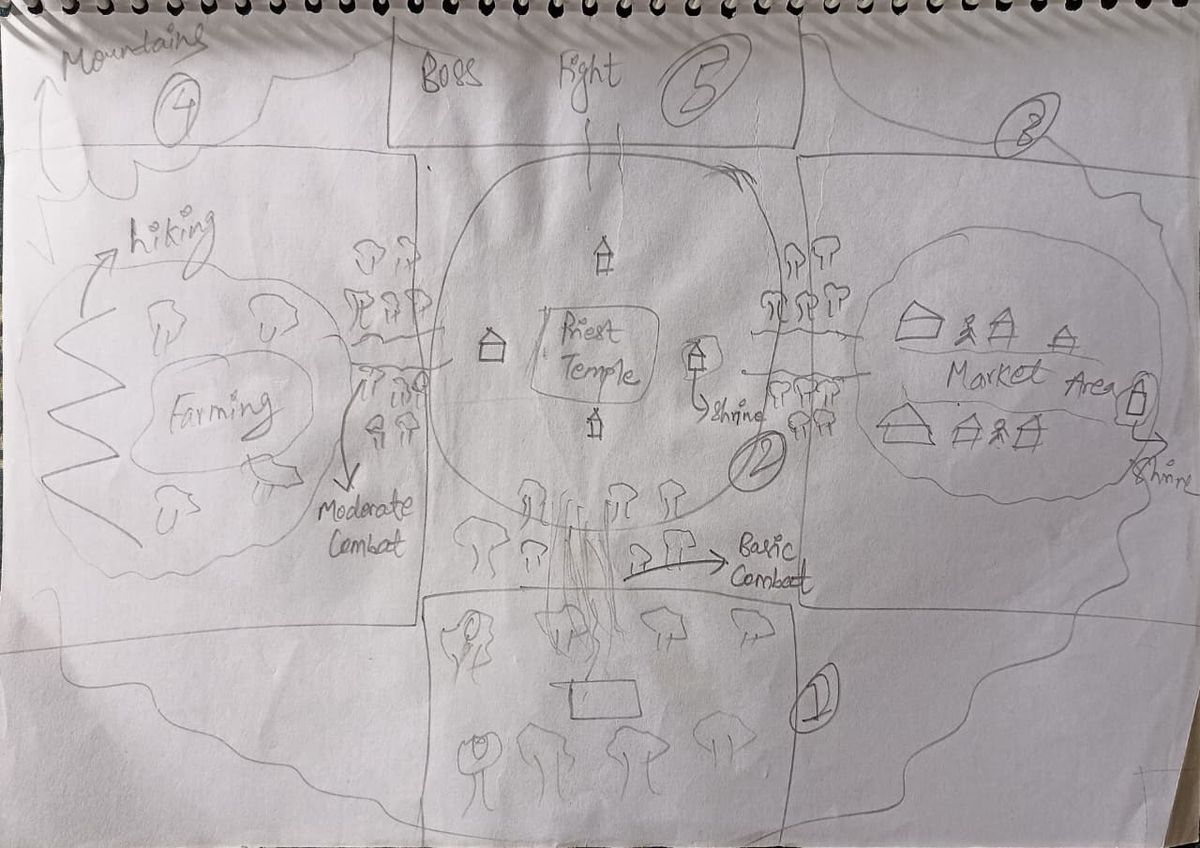
Level Design: Hub-and-Spoke
The world is built on a "Pacing Loop" of Safety → Tension → Relief.
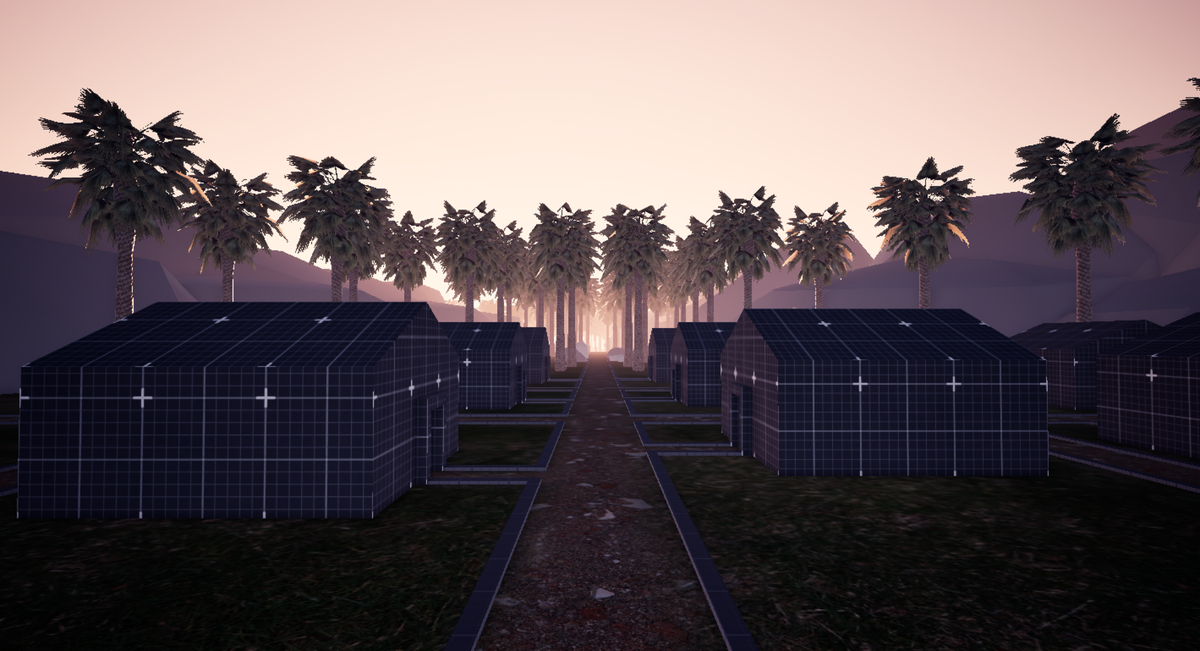
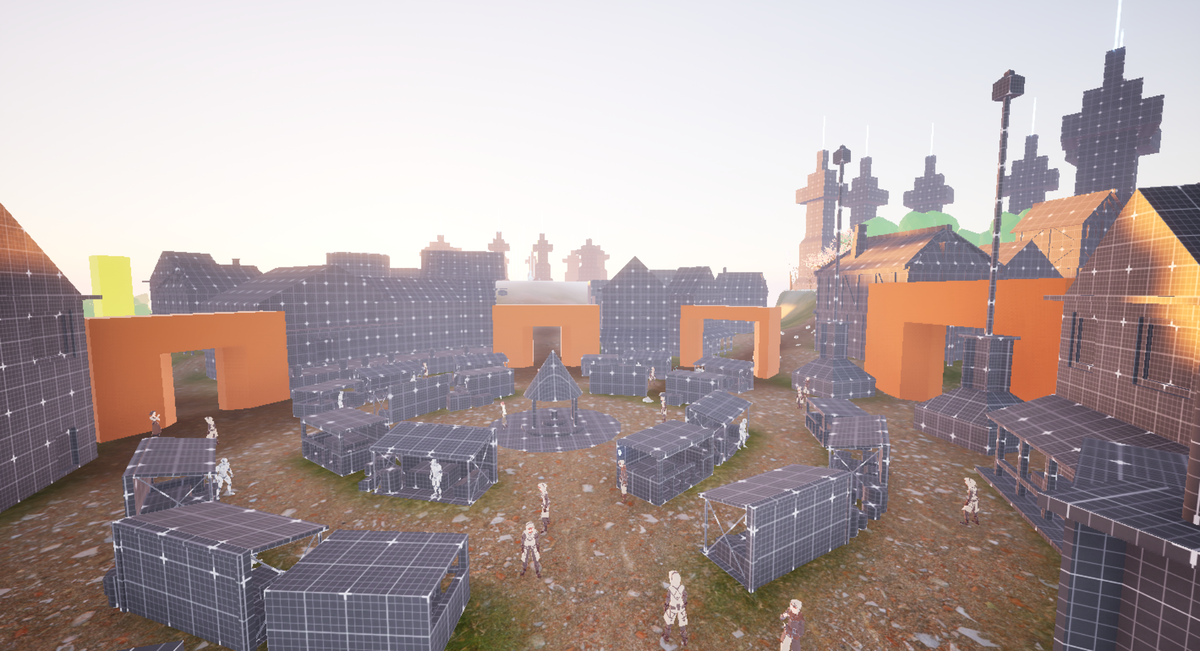
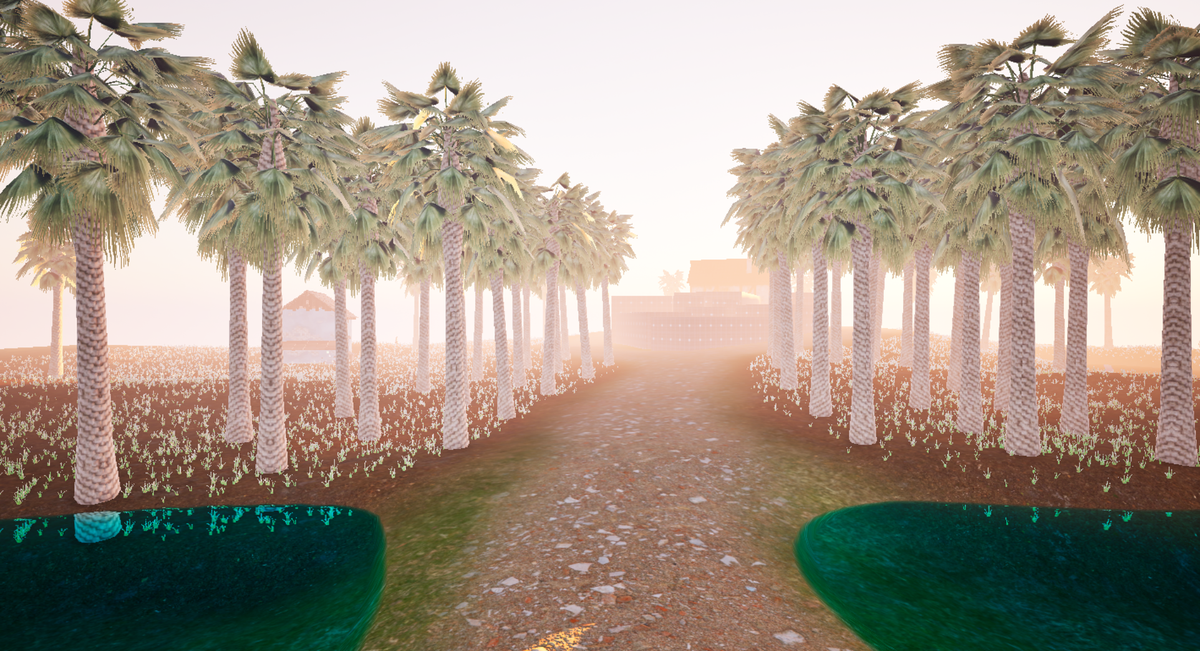
I structured the map around a central Market Hub connected to distinct "Spoke" zones. This layout serves two purposes: it allows players to choose their own difficulty path, and it creates a psychological "return to safety" after every expedition.
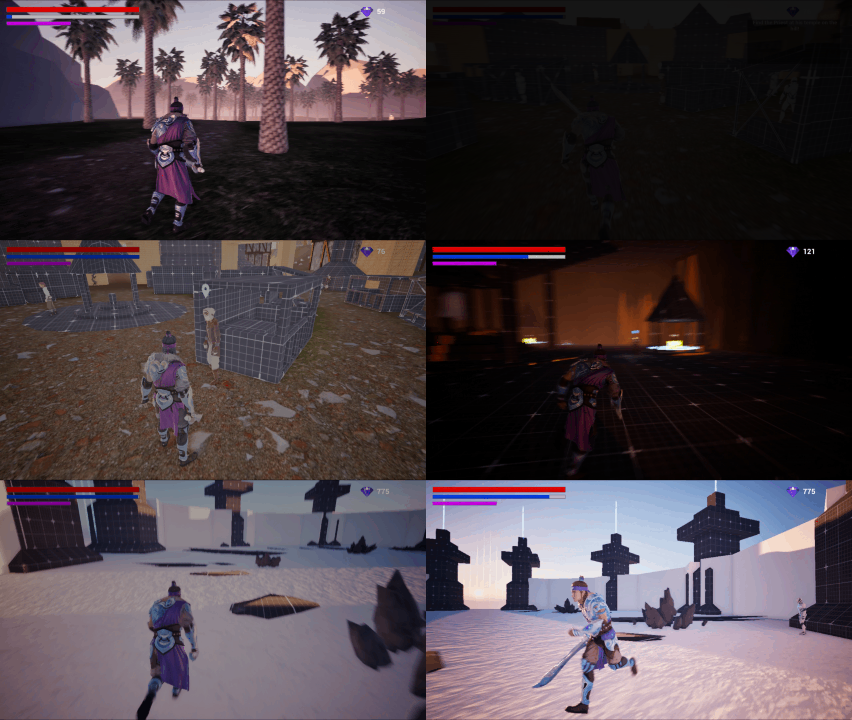
Visual Navigation
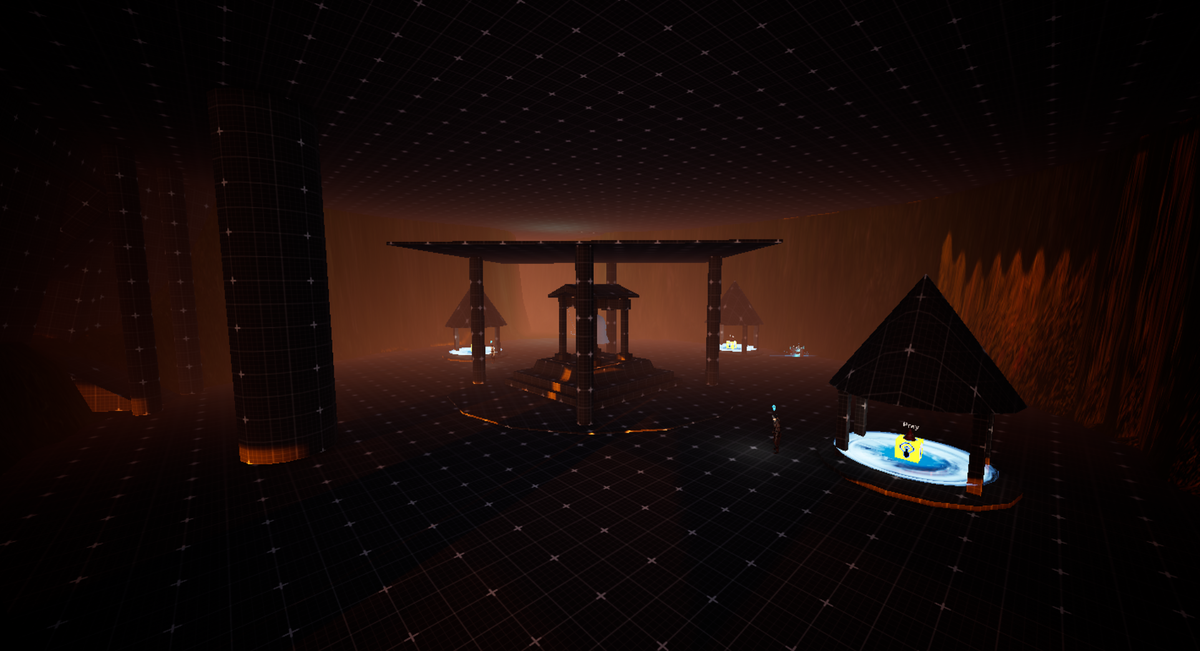
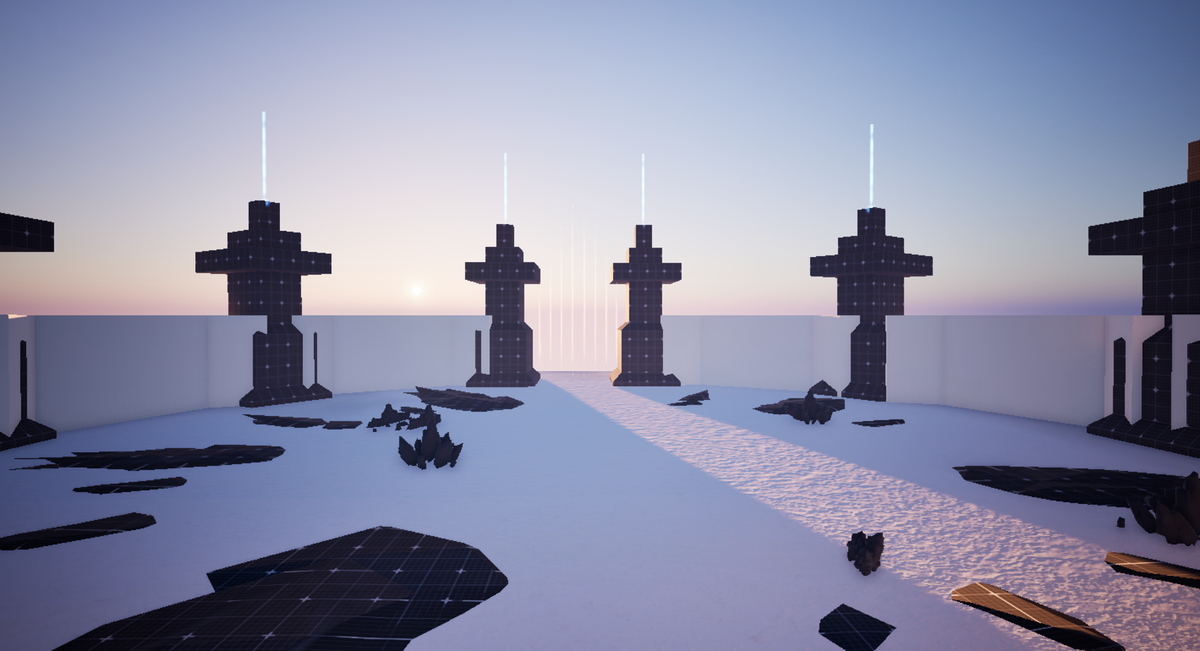
Navigation is guided by lighting. The Hub is bathed in warm, inviting orange tones. As players cross the threshold into a Spoke, the palette shifts immediately to cold blues and sickly purples. This visual shift acts as a subconscious warning system.
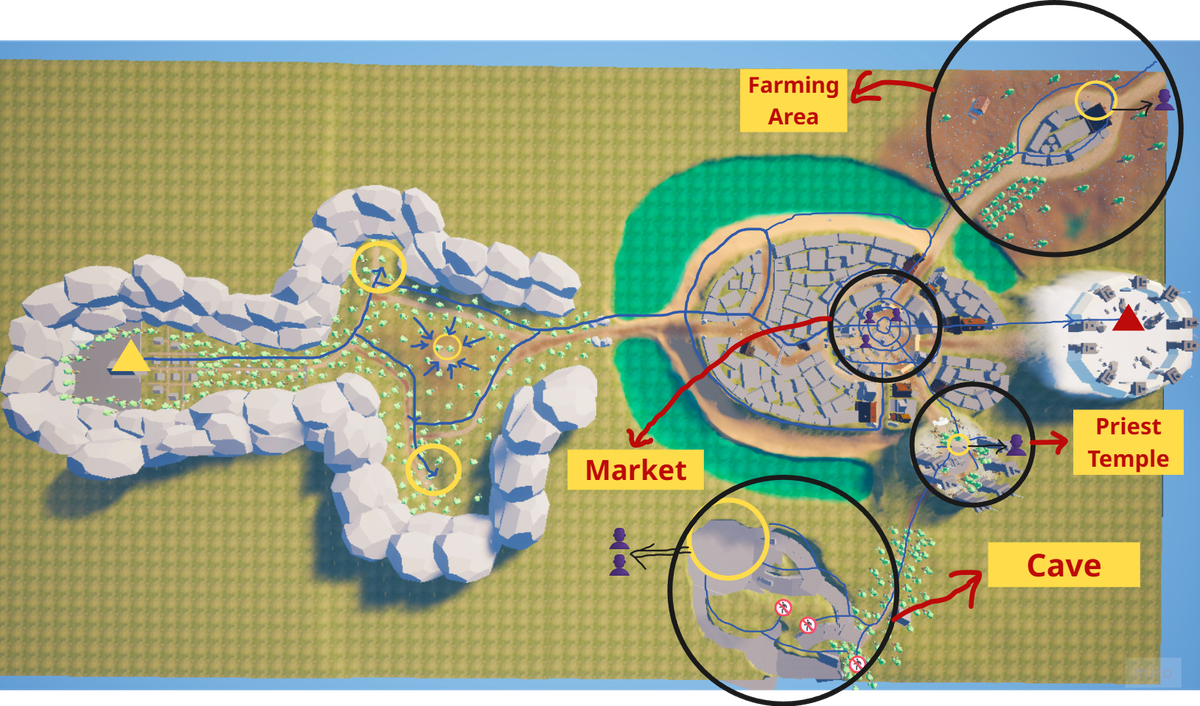
Central Market Hub connecting to the Farm, Cave, and Temple.
System Breakdowns
Traditional RPG skill trees were replaced with a modular Dual-Slot Charm system that rewards active discovery over passive leveling.
- Normal Slot: Holds a base Passive or Active Charm.
- Fused Slot: Unlocks exclusively when specific combinations are equipped together.
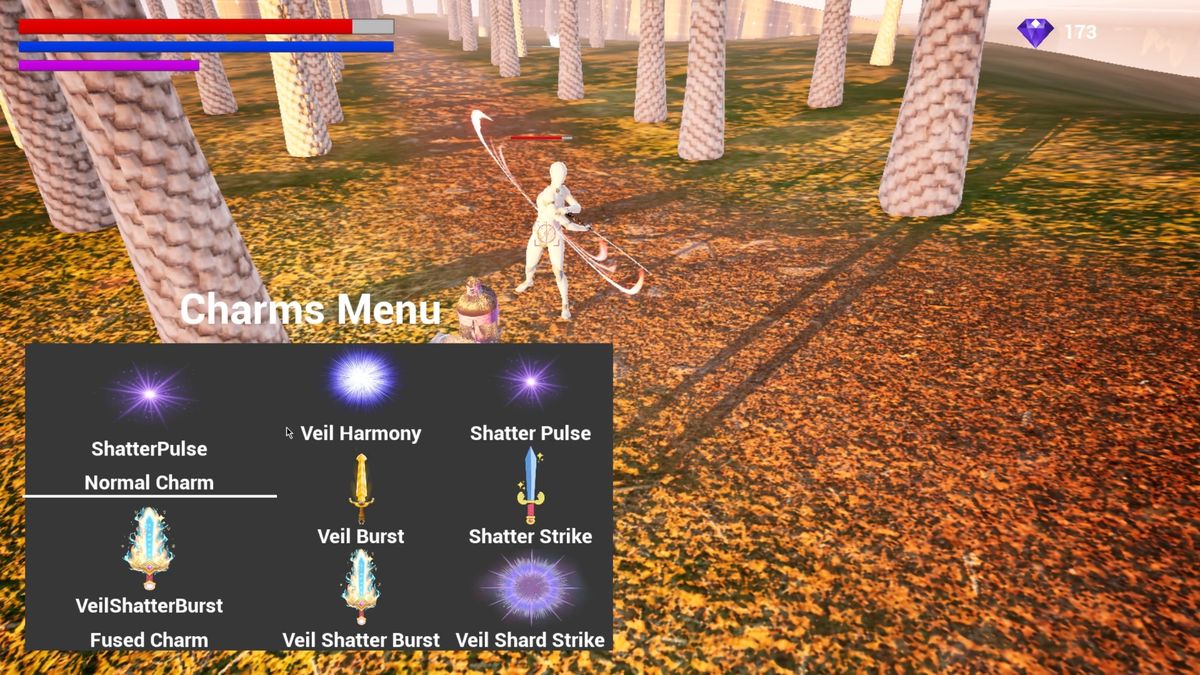
- Example: Pairing Veil Harmony (Defense) with Veil Burst (Attack) unlocks Veil Shatter Burst—a fused ability that grants temporary shielding while dealing massive area damage.
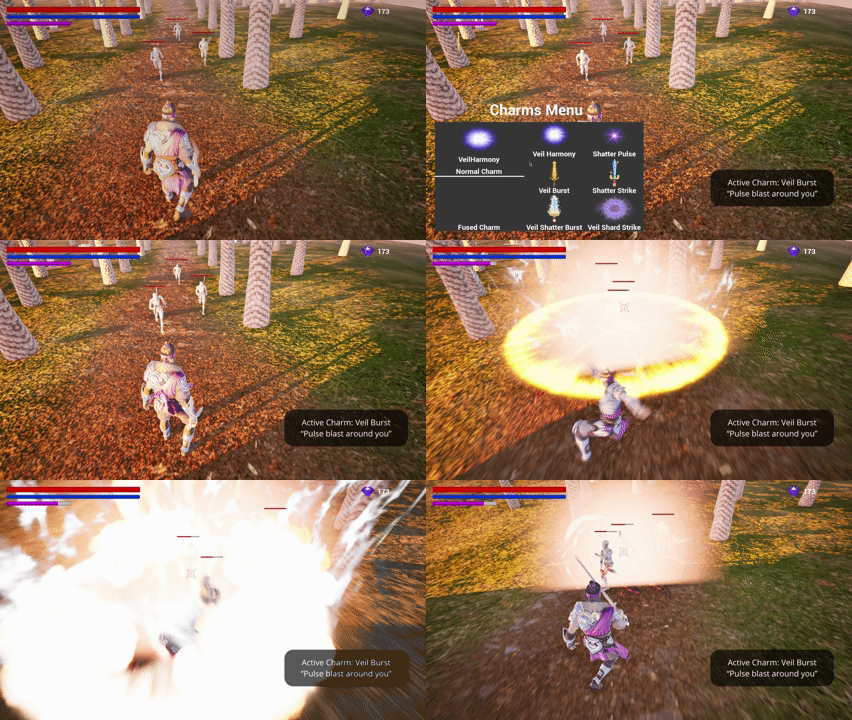
Drag-and-drop inventory enabling real-time build swapping.
The Problem: In short prototypes, players often sprint past side content directly to the boss, ignoring the core combat loops.
The Solution: I implemented a hard economy gate. The final boss is 100% immune to the starting weapon. Players must Purify their sword at Shrines, costing Jewels that drop exclusively from side-content enemies and chests.
Loot gains immediate meaning, and combat feeds progression directly.
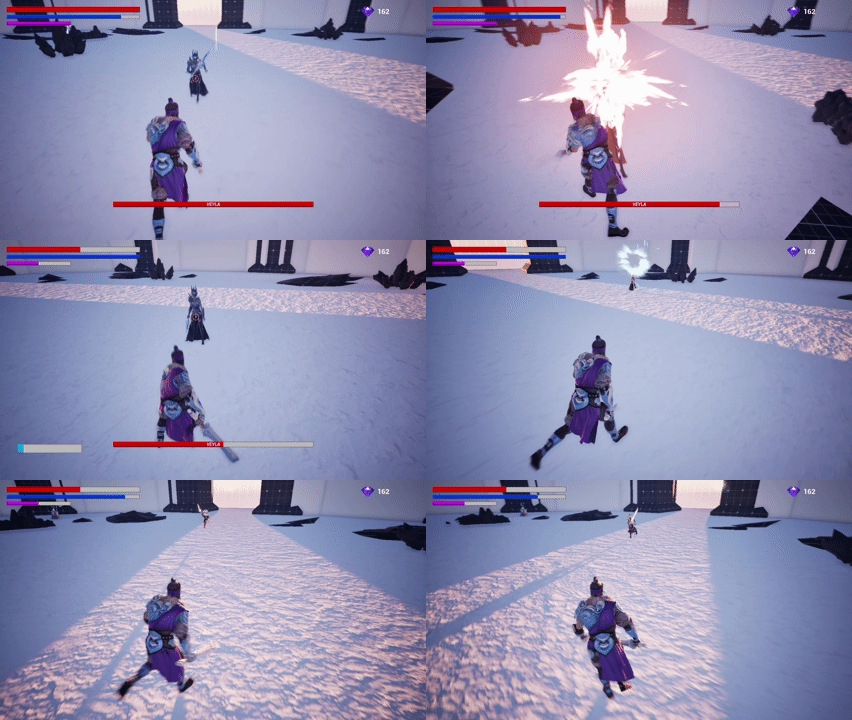
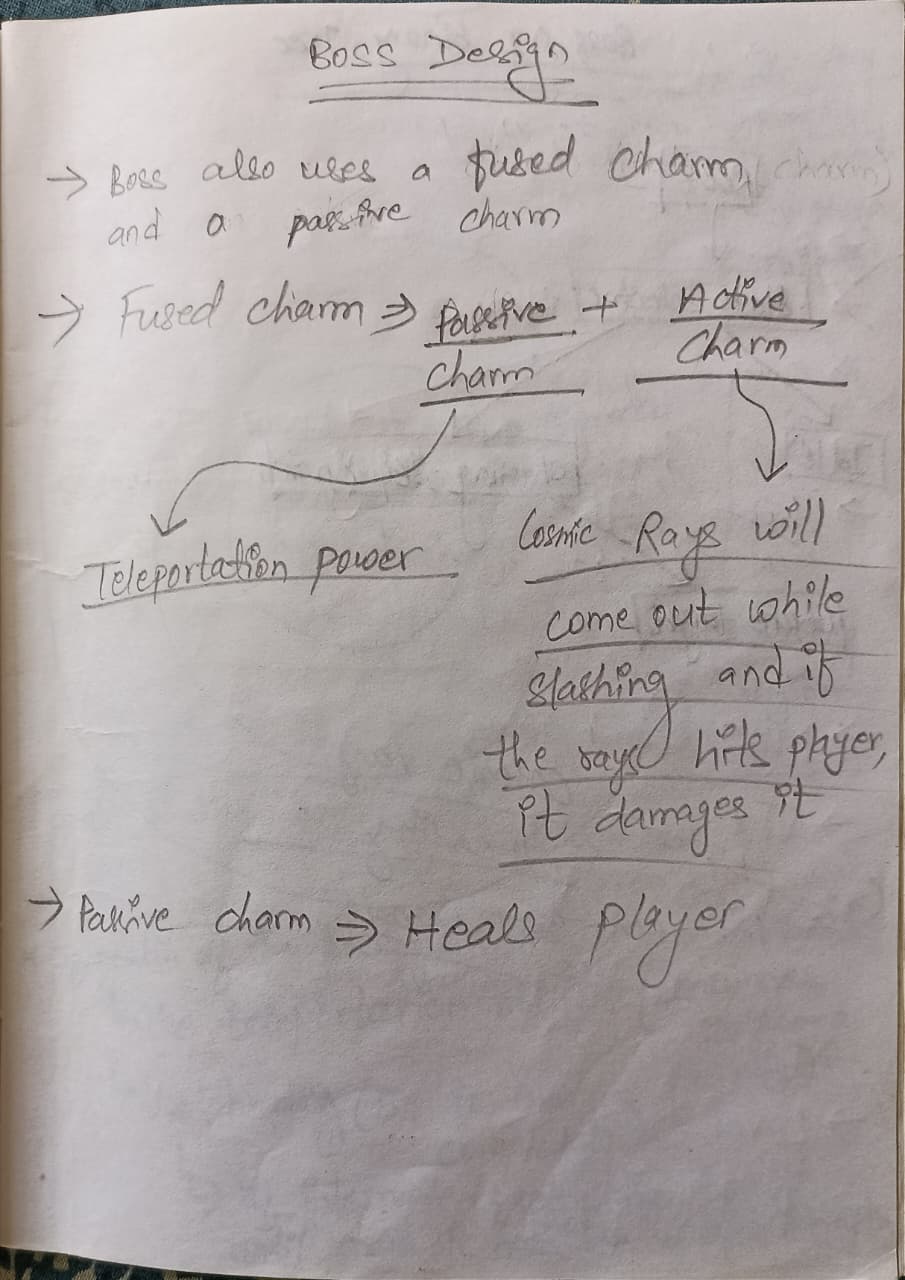
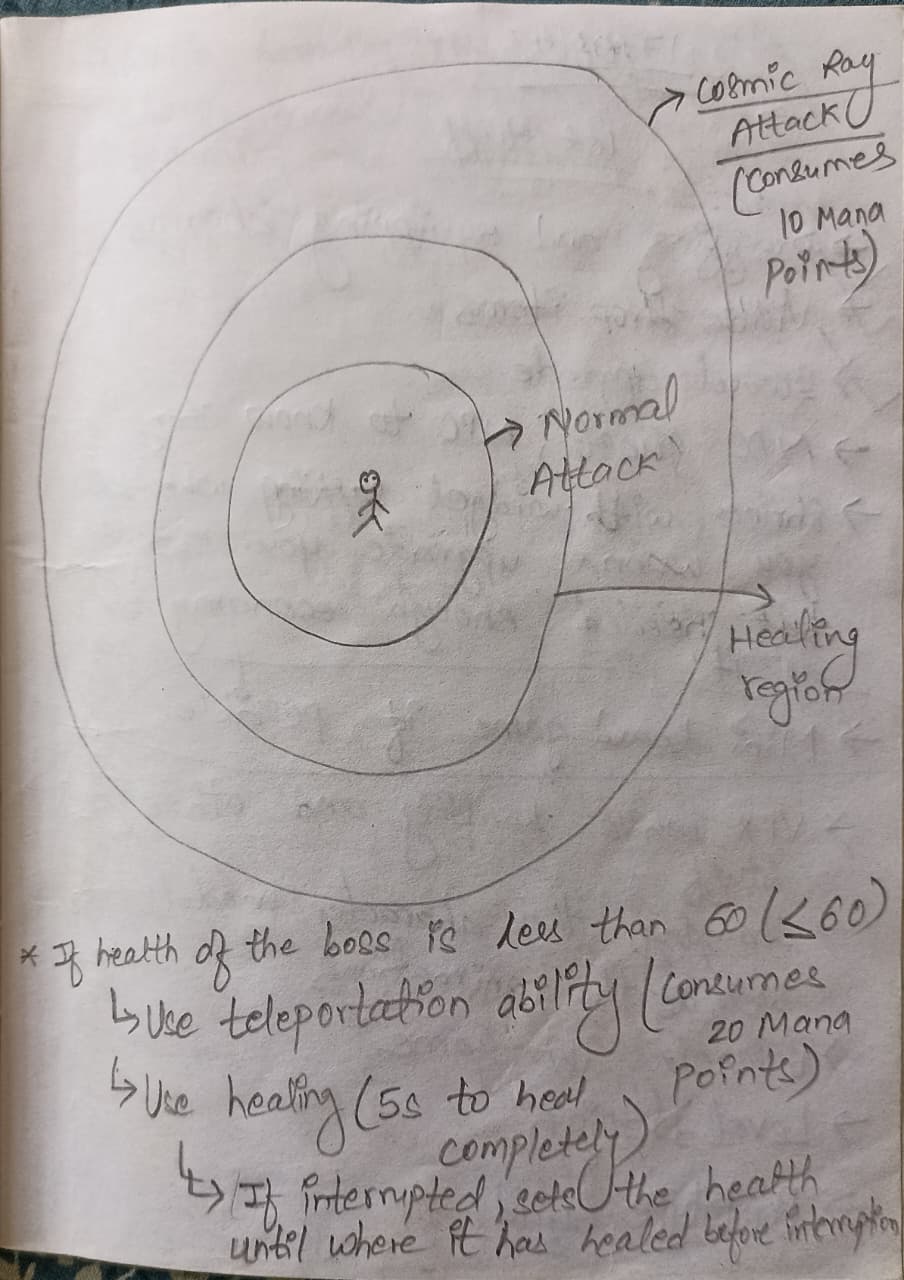
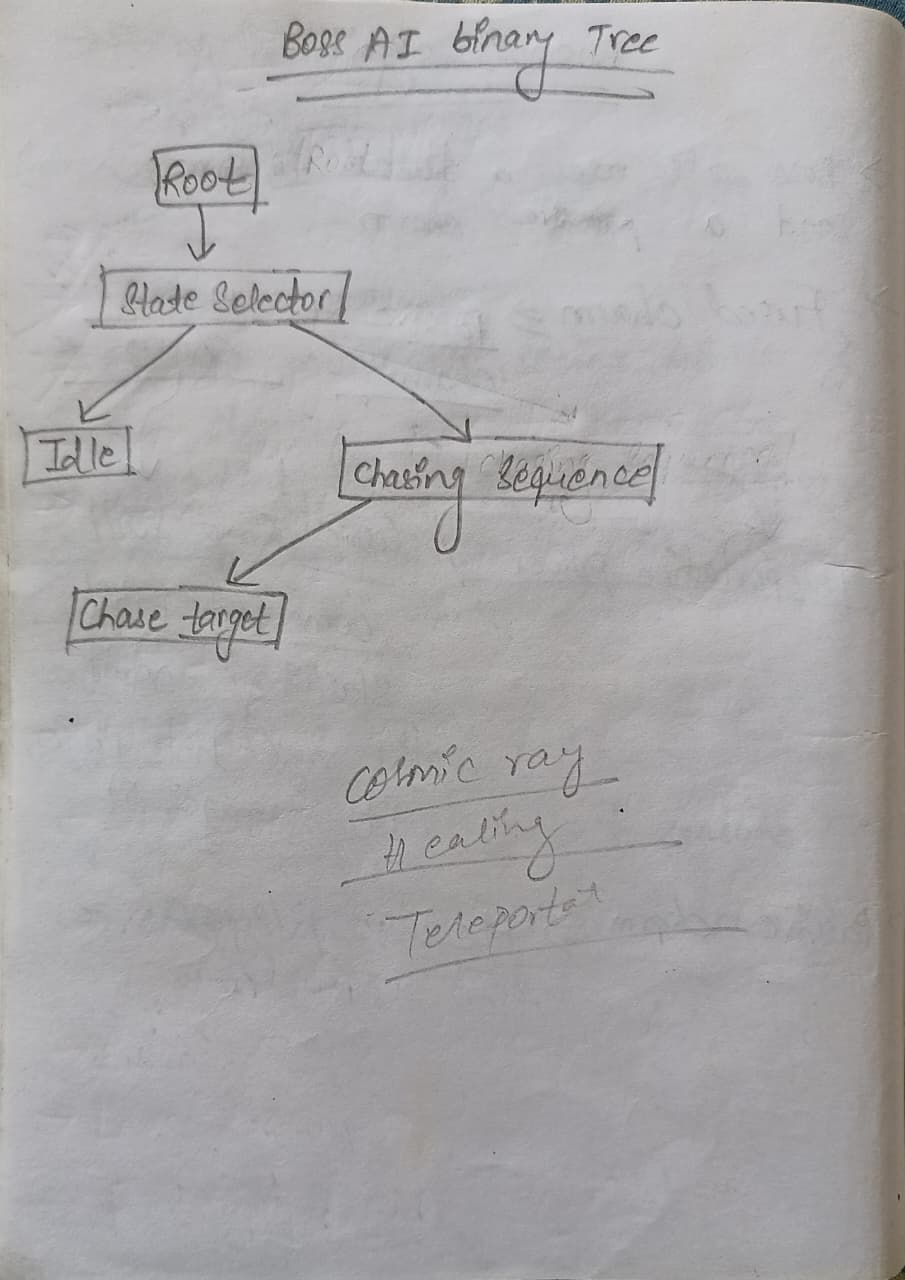
The Boss (Guardian) is driven by a dynamic Behavior Tree that shifts states based on player distance and damage received.
- Melee State: Heavy aggression up close.
- Ranged State: Cosmic ranged attacks if the player kites him.
- Heal State: Teleports away to regenerate if not pressured constantly.
The AI severely punishes passive play, forcing players to constantly adapt.
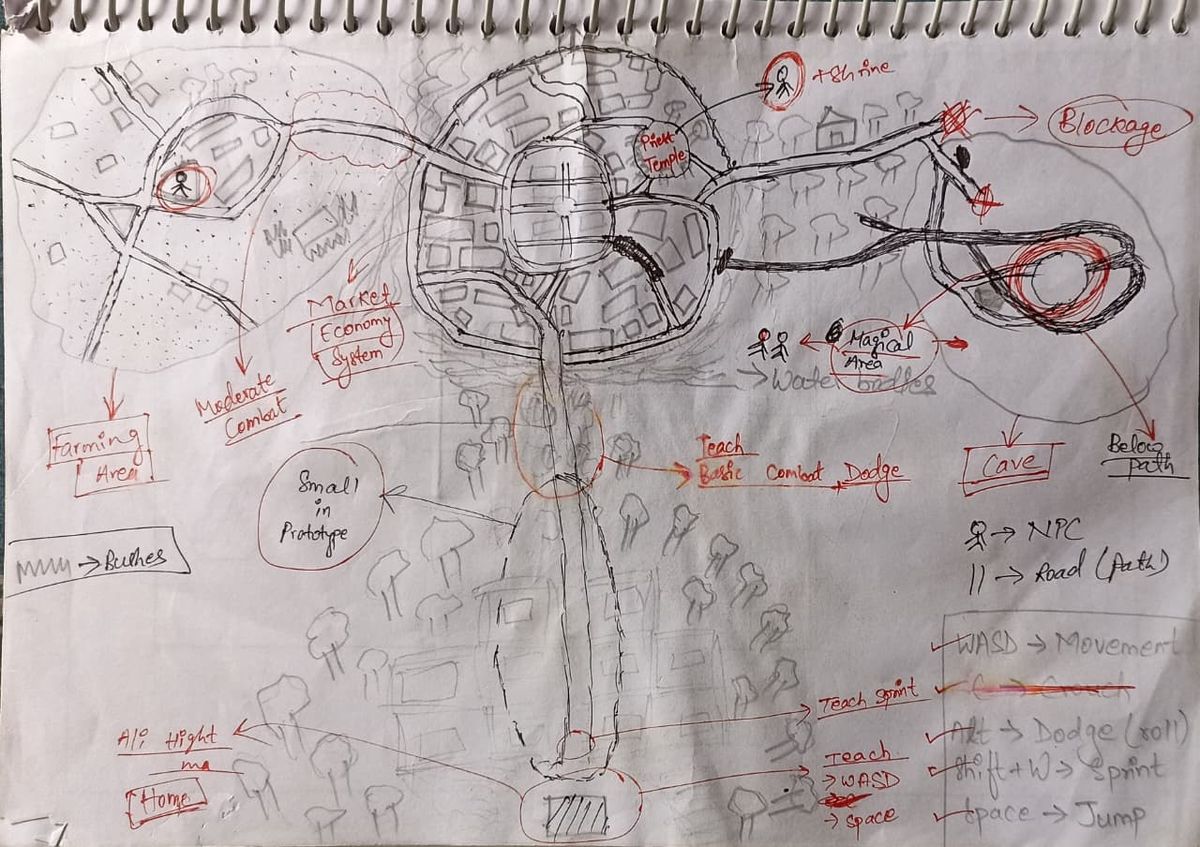
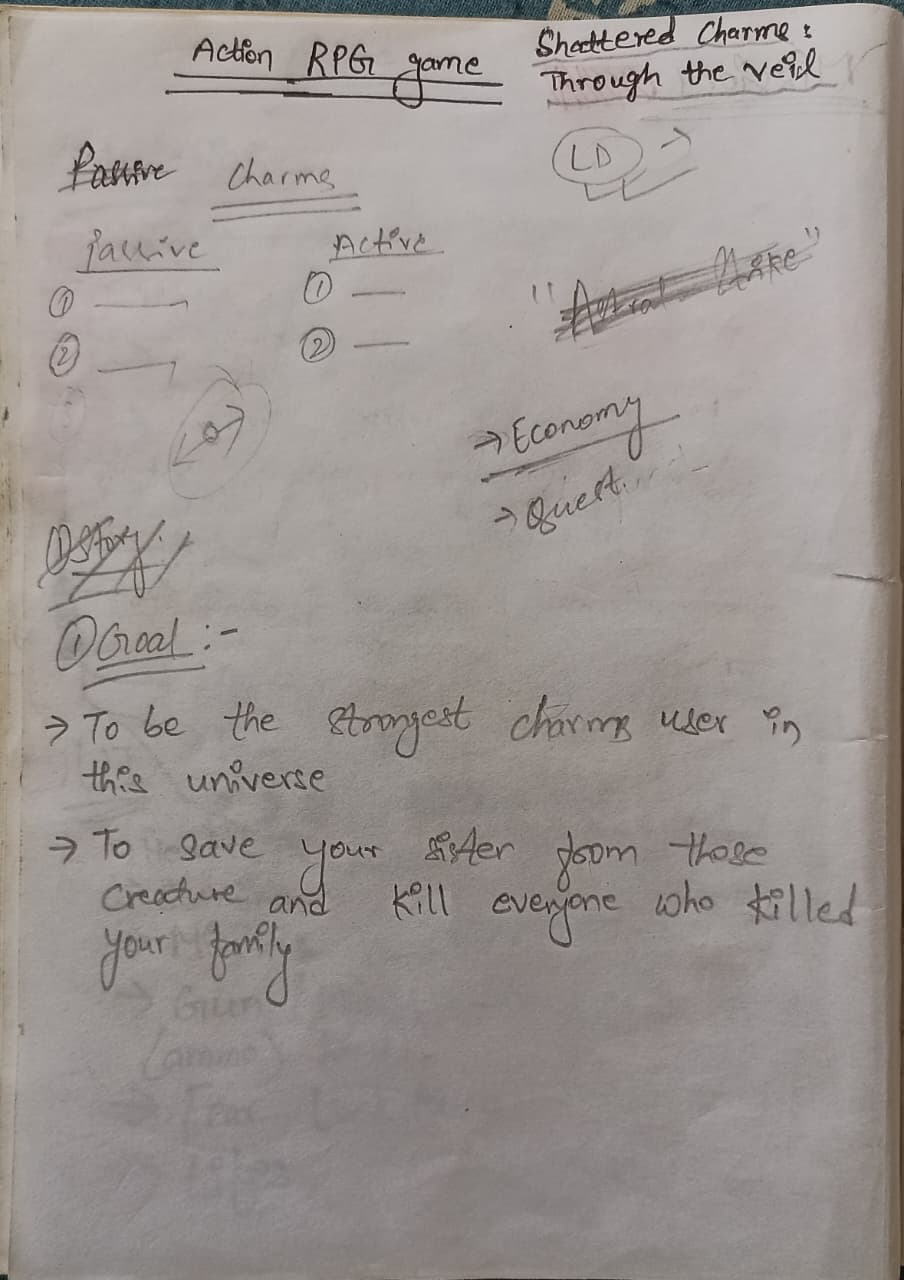
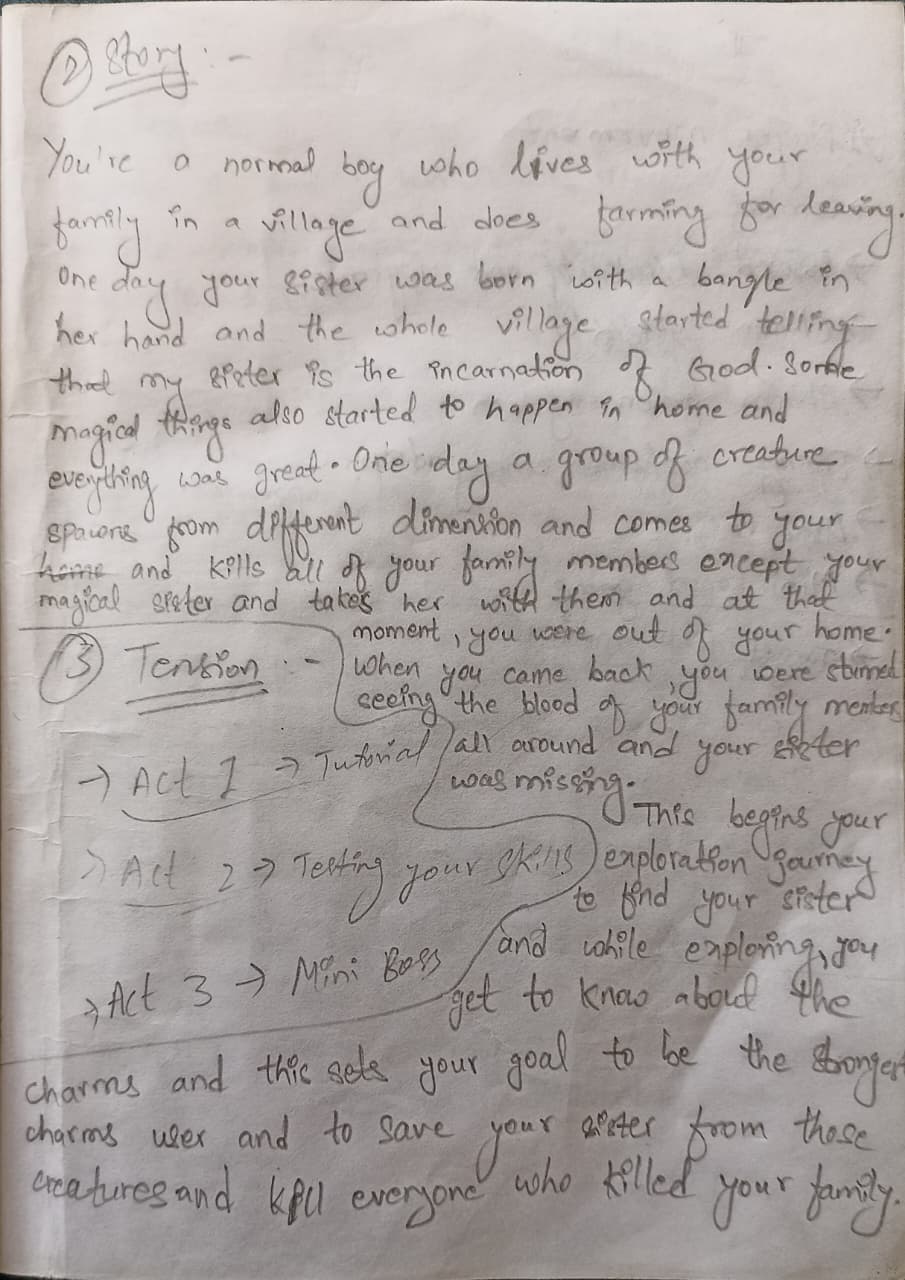
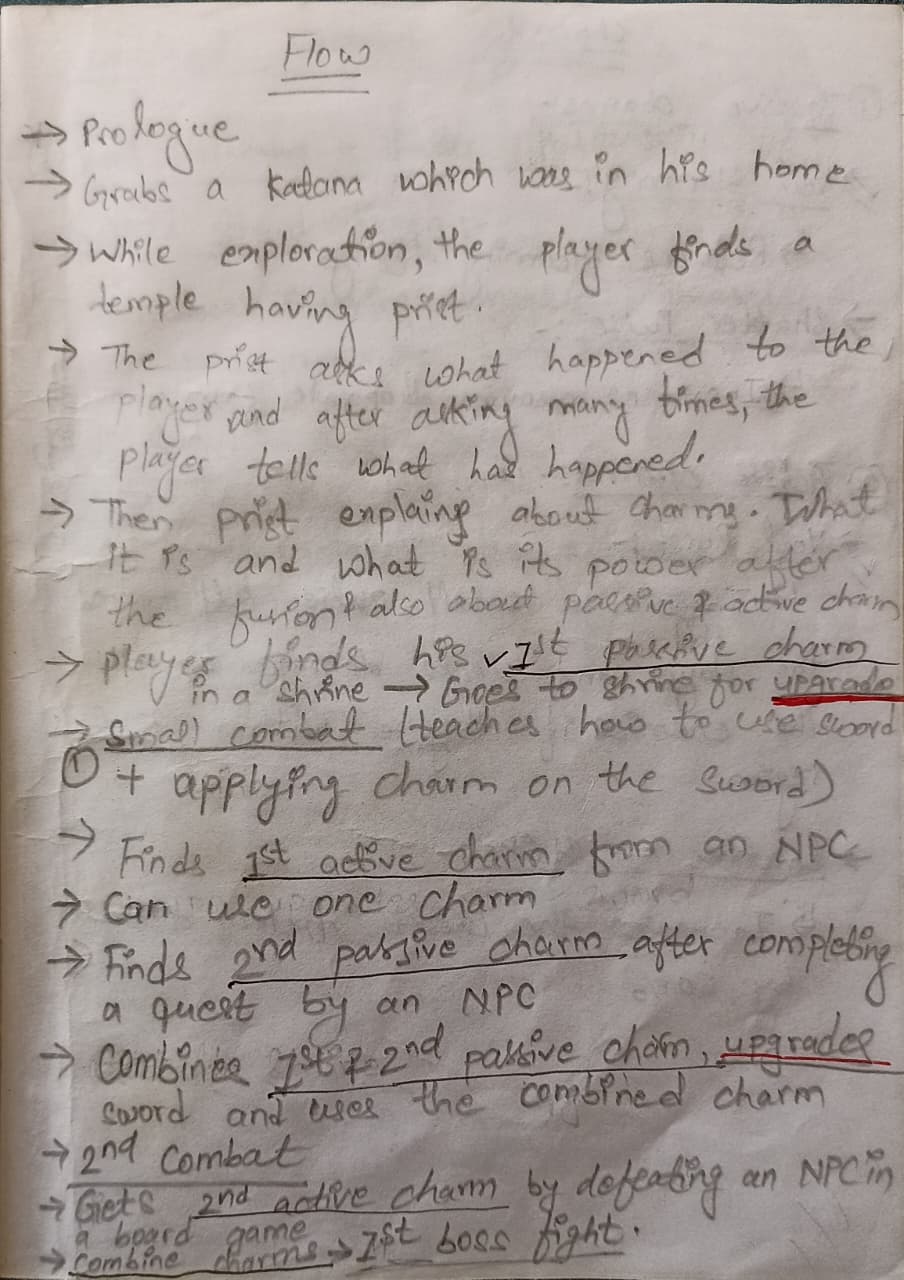
Process: Paper to Engine
Before entering the engine, every system—from the Charm Matrix logic to the Economy Flow—was mapped out and iterated on paper to test viability.
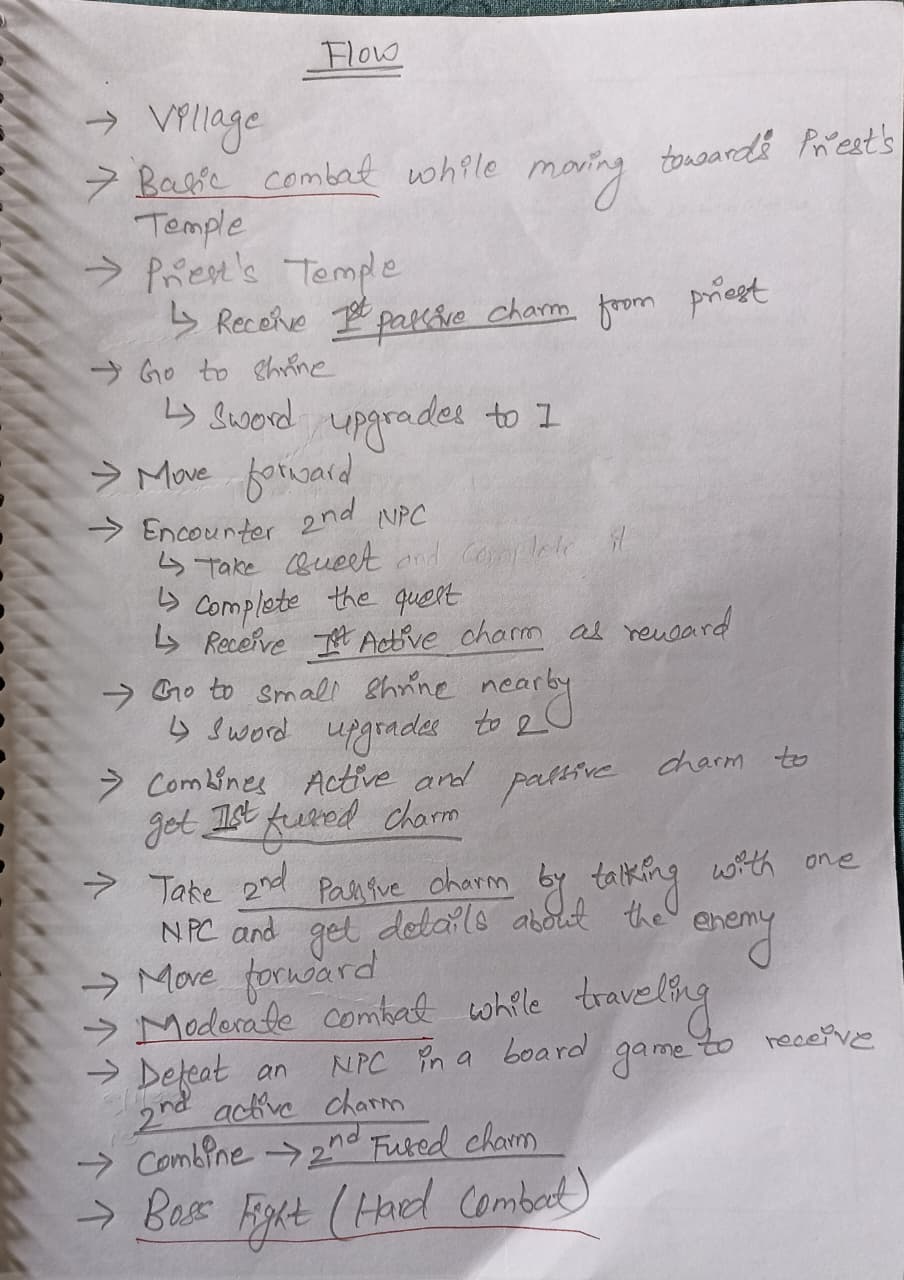
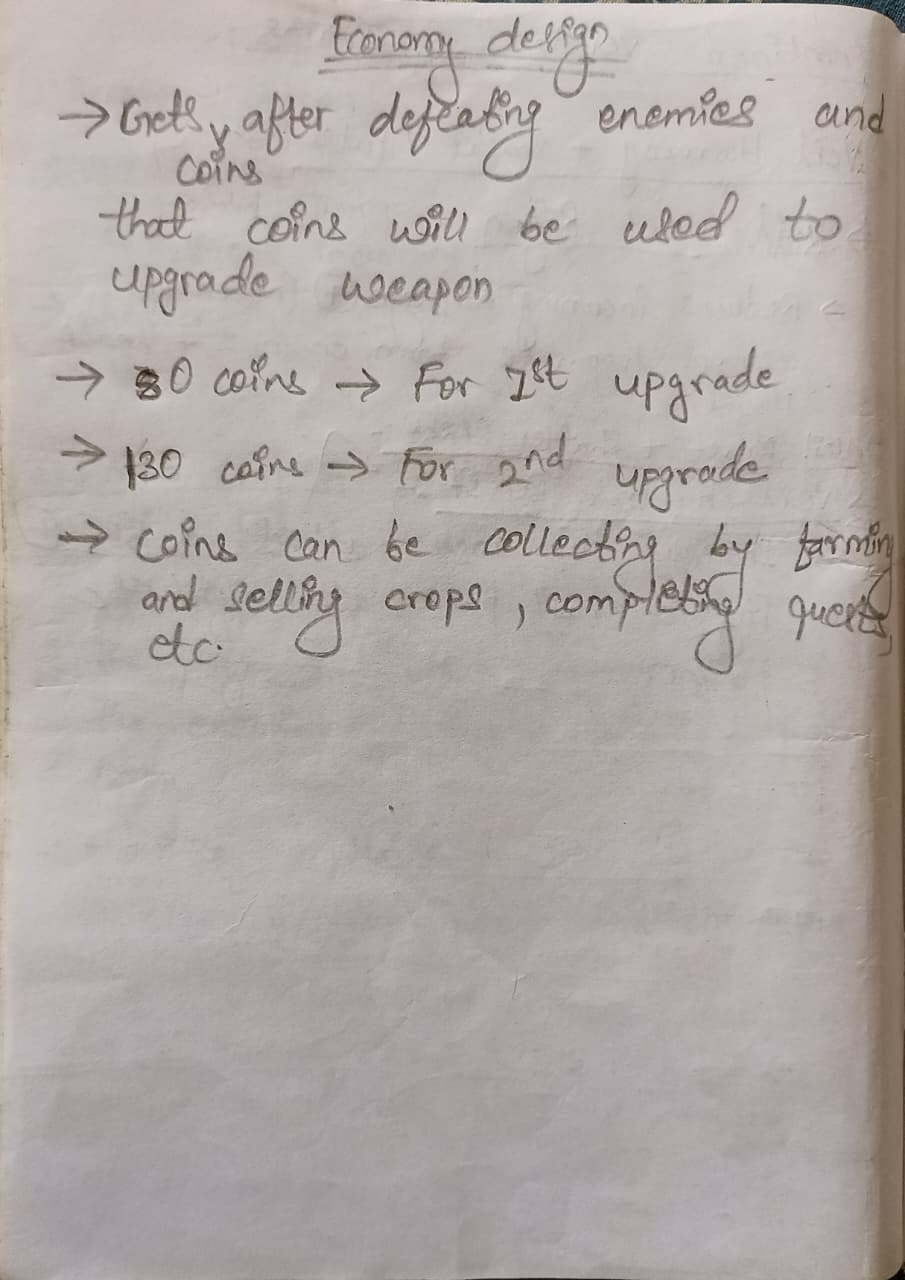
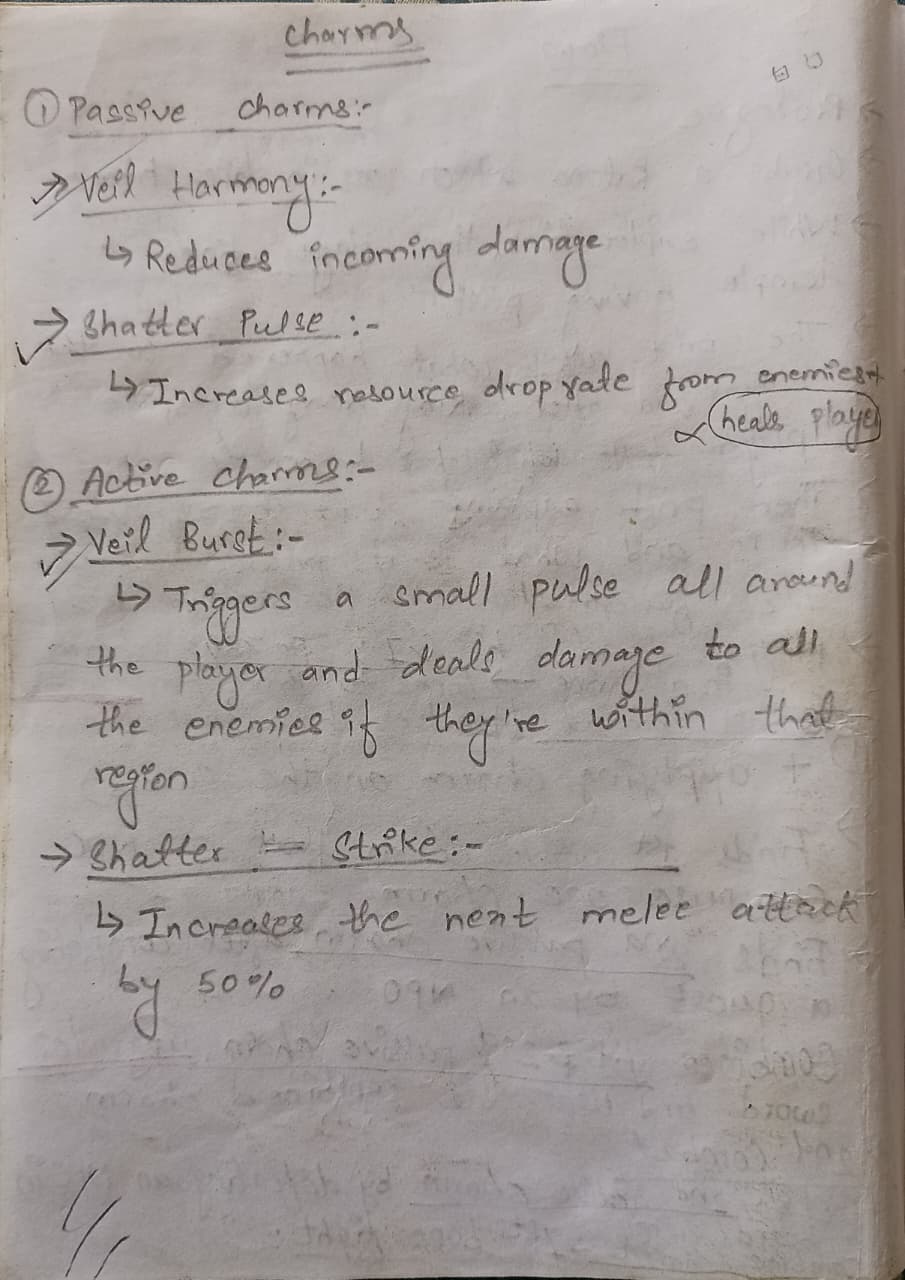
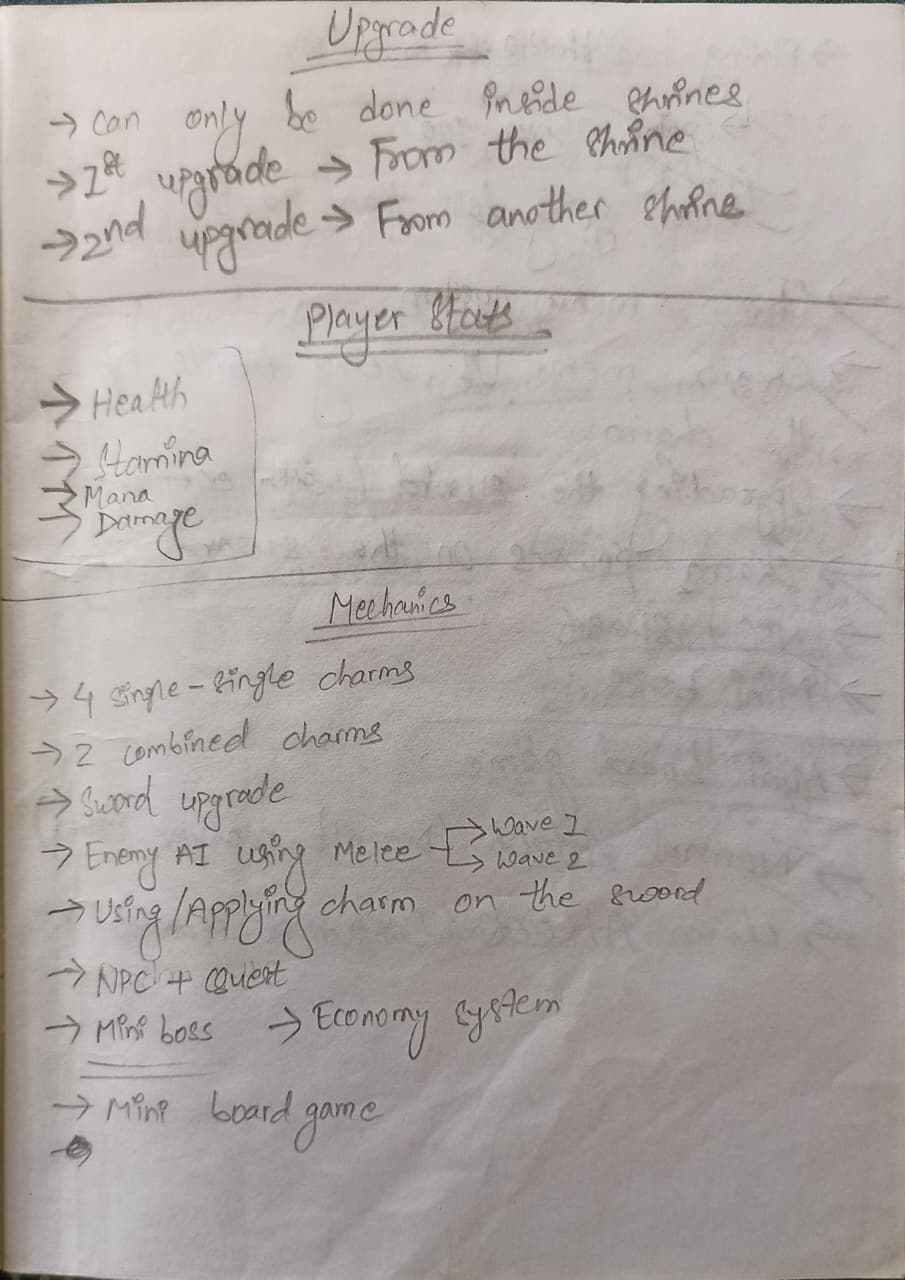
Documentation
Comprehensive technical documents covering system mechanics, level design, and economy balancing.
These documents are designed for quick skimming, focused on systems architecture, economy balancing, and spatial flow.
Main GDD
Deep dive into Charm Matrix logic and core progression.
View PDFLevel Design
Breakdown of Hub-and-Spoke layouts and pacing curves.
View PDFData Sheets
Raw balancing tables covering the Purification Economy.
View PDFPost-Mortem
What Went Right
- Charm Fusion encouraged immediate experimentation and curiosity.
- Hub-and-Spoke layout created a highly readable pacing loop.
- Visual lighting feedback effectively communicated power and safety states.
What Went Wrong
- Camera tracking occasionally struggled in tight, enclosed cave encounters.
- Scope creep early on from an abandoned board-game style side feature.
What I Learned
- Data Tables are absolutely essential for scalable RPG combat systems.
- Economy balance requires constant iteration and spreadsheet modeling.
- These lessons directly informed how I approached economy balance in future studio projects.
Vertical Slice Playthrough
Unedited footage demonstrating the complete Core Loop: Exploring the Hub, traveling to a Spoke zone, combat with Charm abilities, and the final Boss encounter.